 Get Listed

Carbide Costs Are Rising – So Why Are You Still Throwing Drills Away?
Carbide tooling prices have surged—and more importantly, they’re not expected to drop any time soon. For subcontract machine shops and manufacturers, that creates a simple but uncomfortable truth:
Your consumable tooling strategy may no longer be sustainable.
Drills—especially carbide—are one of the most frequently replaced tools in any shop. Yet they are also one of the easiest to recover, reuse, and optimise.
The question is no longer “Should we sharpen drills?”
It’s now “Why aren’t we already doing it?”
The Hidden Cost of “Disposable” Carbide
Carbide drills are often treated as consumables—but they don’t behave like one.
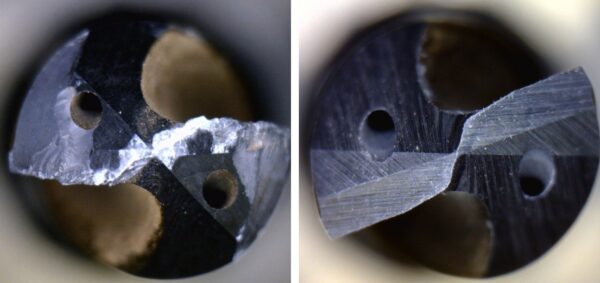
- A worn drill is rarely “finished”
- Geometry degradation—not total failure—is the real issue
- Performance loss often comes long before actual tool life ends
That means every time a drill is scrapped, you’re not just losing tooling—you’re losing unused performance and sunk cost.
And with carbide prices rising, that loss is only getting more expensive.
The Case for In-House Drill Sharpening
Modern drill sharpening has changed.
Today’s systems are:
- Simple to use
- Highly repeatable
- Capable of carbide regrinding
- Fast enough for production environments
Machines like the Darex XT-3000 Drill Sharpener allow shops to sharpen drills in-house for pennies per tool rather than replacing them.
Even more compelling:
A UK manufacturer reported that their machine paid for itself in just five months, eliminating the need to buy new carbide drills during that period. As Carbide Costs Are Rising
Two Approaches – One Goal: Cost Control
Entry-Level: Darex V391 Drill Sharpener
For smaller shops or lower volume environments, the V391 offers:
- Drill capacity: 3–19mm
- Adjustable geometry (point, relief, split)
- Simple, intuitive operation
- Optional diamond wheel for carbide
This is the ideal starting point for shops looking to reduce spend without complexity.
Production-Level: Darex XT-3000 Drill Sharpener
For higher volume users, the XT-3000 delivers:
- Capacity up to 21mm (30mm with attachments)
- Capability to sharpen carbide, HSS, and cobalt drills
- Advanced adjustability and attachments
- Automation options for repeatability
It’s designed for shops where tooling cost, uptime, and consistency are critical.
Better Than New?
It’s a bold claim—but a common one.
Users consistently report that properly sharpened drills:
- Cut more efficiently
- Reduce spindle load
- Improve hole quality
In many cases, reconditioned drills actually outperform poorly optimised new tools.
Why This Matters Now
With carbide prices remaining high, the economics have shifted:
Sharpening is no longer a “nice to have”—it’s a strategic response to rising tooling costs.
Think Again About Your Drills
If you’re still disposing of worn carbide drills, you’re effectively:
- Writing off usable tool life
- Increasing cost per hole
- Leaving margin on the table
With solutions like the Darex V391 Drill Sharpener and Darex XT-3000 Drill Sharpener, there’s now a clear alternative.
Sharpen. Reuse. Reduce Cost. Repeat.
For more information on Carbide Costs Are Rising – So Why Are You Still Throwing Drills Away? talk to 1st Machine Tool Accessories