Why Most UK Manufacturers Still Sell the Way They Did in 2015
- 12 Aug 2026
- Articles
Walk around any UK trade show and you'll hear the same thing from stand after stand: "Most of our work comes through word of mouth." Ten years ago, that was fine. Referrals kept order books full, and a basic website with a phone number was enough to tick the "online presence" box. But the way buyers find and vet suppliers has changed dramatically since then, and a lot of manufacturers haven't caught up.
The gap between how industrial buyers research and how many firms actually sell is getting wider every year, and it's costing smaller manufacturers work they don't even know they've lost. Now let’s look at where the disconnect is and what a realistic go-to-market update looks like without a big budget or a dedicated marketing team.
Buyers Moved Online, but Most Suppliers Didn't
Here's what's changed. A procurement manager at a mid-sized OEM used to pick up the phone, ask a colleague for a recommendation, or flip through a trade directory. Now, they'll run a search, scan supplier websites, compare capabilities, read case studies, and build a shortlist before they ever make contact. By the time they send an enquiry, they've already done most of their homework.
The problem is that most small UK manufacturers still don't have a website that answers the questions buyers are actually asking. There's no detail on capabilities, no indication of industries served, no examples of past work. It's a digital brochure from 2014 with a contact form tacked on. That means these firms are invisible during the research stage, and they're losing out to competitors who've made the effort to show up where buyers are looking.
Why Trade Shows Alone Won't Cut It Anymore
Trade shows still have a place. They're good for face-to-face conversations, for showing physical samples, and for catching up with existing contacts. But relying on them as a primary sales channel is expensive and unpredictable. You're paying thousands for a stand, travel, and staff time, and the return depends entirely on who happens to walk past.
The bigger issue is what happens between events. If a buyer visits your stand in October but doesn't have a project until March, they'll go back to Google. And if your website doesn't give them a reason to remember you or a way to find you again, that lead is gone. FSB data has consistently shown that small firms investing in digital channels tend to grow faster than those that don't, and that tracks with what you'll see across the manufacturing sector. The firms winning new work are the ones that show up in search results, not just at exhibitions.
What a Modern Go-to-Market Looks Like for a Small Manufacturer
You don't need a massive marketing budget or a full-time sales team to update how you sell. A modern go-to-market approach for a smaller manufacturer comes down to four things:
- Useful website content that answers the questions buyers actually ask.
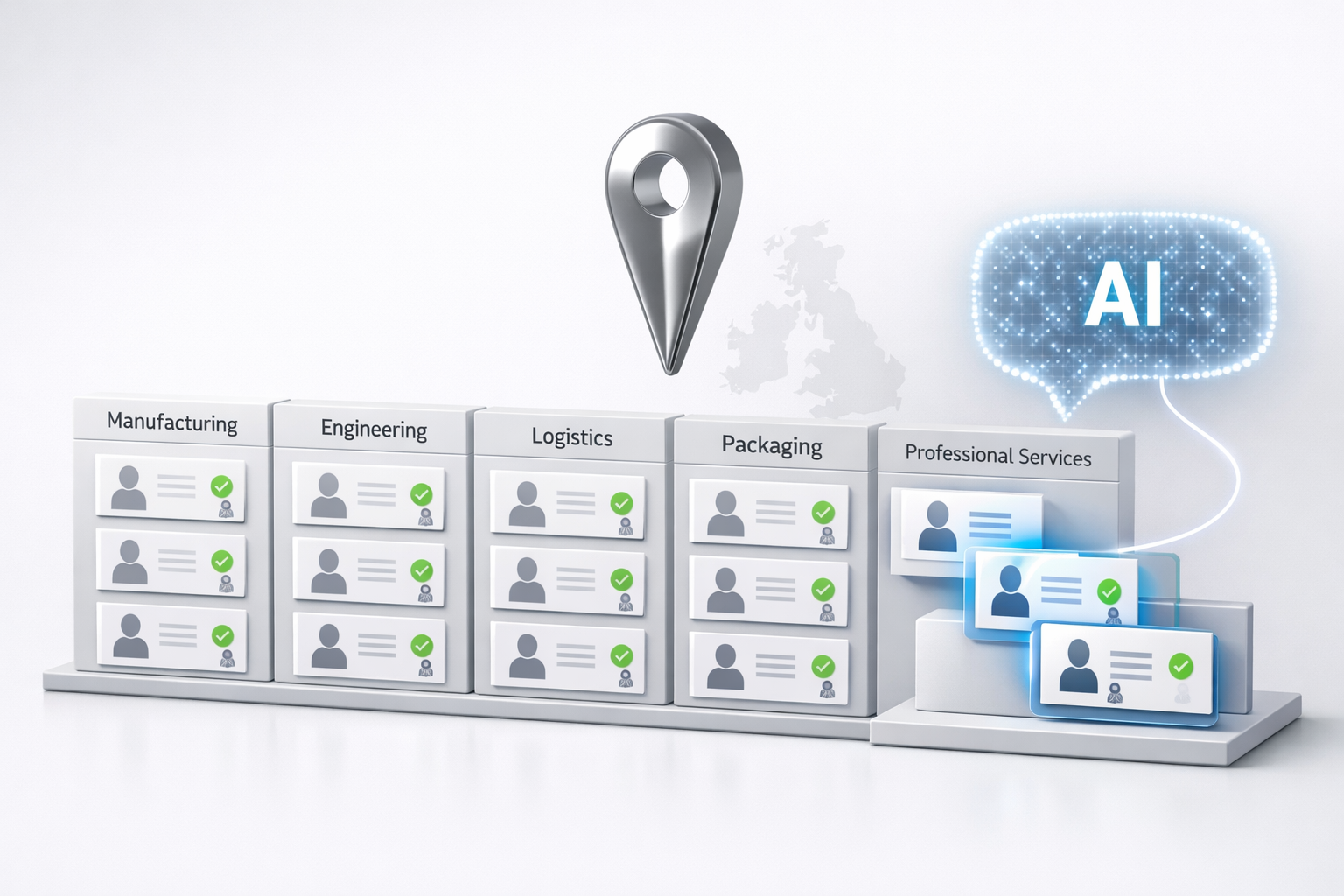
- Directory visibility on B2B platforms where procurement teams search for suppliers.
- Targeted outreach that references a buyer's specific industry and your relevant capability.
- A clear follow-up process for tracking enquiries and staying in touch with prospects who aren't ready to buy yet.
These aren't manufacturing-specific ideas. Most of the go-to-market thinking on GTM Thoughts is written with tech and SaaS companies in mind, but the core logic applies just as well to a precision engineering firm in the Midlands: show up where your buyers are looking, answer their questions before they pick up the phone, and follow up properly. The only difference is that most manufacturers are about a decade behind on adopting it.
Most of this is common sense, but it's surprising how few manufacturers do it consistently. If you specialise in tight-tolerance CNC machining for aerospace, say so on your site. If you can turn around prototypes in five days, put that front and centre. And stop sending generic "we do all types of machining" emails. They end up in the bin.
The Real Cost of Standing Still
The manufacturers who'll struggle most over the next few years aren't the ones with outdated equipment. They're the ones with outdated sales habits. Around 35% of UK SMEs considered digital transformation a top priority heading into recent years, and that number keeps climbing. The firms that move first will pick up the work that used to be shared around more evenly.
And it's not just about winning new customers. Existing clients change roles, retire, or move to competitors. If your pipeline depends on a handful of personal relationships, one or two departures can leave a real gap. A visible online presence and a consistent outreach process will give you a buffer against that.
Stop Waiting for the Phone to Ring
The manufacturers who do well over the coming years won't necessarily be the biggest or the best-equipped. They'll be the ones who made it easy for buyers to find them, gave them the information they needed upfront, and followed up properly.
None of this requires a huge investment. But it does require a decision to stop relying on methods that worked a decade ago and start meeting buyers where they actually are. The phone will keep ringing, but only if people can find your number.