How Digital Platforms Bring Real-Time Interaction to Users
- 16 Jun 2026
- Articles
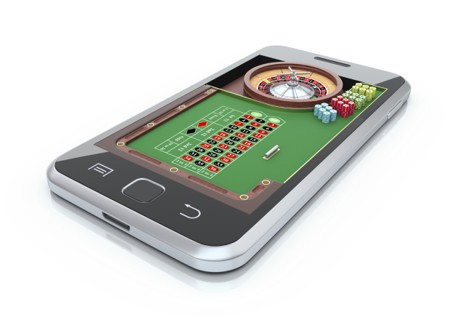
A decade ago, “live” online often meant one thing: a play button and a prayer that the stream wouldn’t buffer. Now “live” is a moving target. A chat message lands instantly. A leaderboard ticks up mid-match. A host answers a question while reading it. The internet has started acting like a room people can actually share.
That appetite for in-the-moment experiences is exactly why searches and services around live formats keep growing, including options like tamashabet live casino in india. The point isn’t the category. It’s the expectation behind it: if something claims to be live, users want proof in seconds, not a delayed replay pretending to be real.
Real-time interaction, minus the buzzwords
Real-time interaction is basically two things working together: speed and synchronicity.
Speed means the platform reacts quickly when someone taps, types, swipes, speaks, or pays. Synchronicity means different people see roughly the same thing at roughly the same time, so the “moment” feels shared instead of fragmented.
That’s why a live chat that shows messages 25 seconds late feels dead, even if it’s technically functioning. The room has moved on without it.
Real-time shows up in more places than most users notice:
- Live streams with chat, polls, and reactions that actually matter
- Multiplayer games where input timing decides outcomes
- Live shopping and auctions where stock counts change in front of everyone
- Customer support chats that answer during a session, not two days later
- Live dealer formats where timing and visibility are part of trust
Different industries, same promise: what’s happening on screen is happening now.
The plumbing that makes “right now” possible
Most platforms do not achieve real-time by refreshing pages faster. They achieve it by changing how apps and servers talk.
Persistent connections: the quiet engine behind live updates
Traditional web browsing is stop-and-go. The browser asks the server for a page, gets a response, then goes quiet. Real-time platforms prefer a persistent connection, so the server can push updates the moment something changes.
This is where technologies like WebSockets often come in. Users do not need to know the term. They only feel the result: a chat that flows, a game state that updates smoothly, a live counter that doesn’t jump in weird bursts.
If a “live” platform delivers updates in clumps, it’s usually a sign the connection isn’t truly persistent, or the system is struggling under load.
Edge delivery: moving the action closer to the user
Even a perfect app feels slow if every update has to travel too far. That’s why content delivery networks and edge servers matter. They place parts of the system nearer to users, reducing round-trip time.
This is especially noticeable in:
- live video, where delay ruins the vibe fast
- competitive play, where milliseconds become arguments
- payment confirmation, where hesitation reads like risk
Users do not celebrate edge computing. They just stop complaining.
Adaptive streaming: the trick that keeps live video alive
A live stream can either look pristine or keep moving through bad network conditions. The best platforms choose movement. They adjust video quality in real time, trading sharpness for continuity when the connection gets shaky.
That decision is practical. People forgive a short blur. They rarely forgive repeated buffering, because buffering breaks the feeling of presence.
Why users have become so intolerant of delay
It’s not just impatience. It’s conditioning.
Big platforms taught users that tap equals response. When something takes too long, the brain starts asking questions it didn’t ask before. Is the app frozen? Did the payment go through? Did the match start without them? Is the stream actually live?
In categories involving money, competition, or social status, delay turns into distrust. Even a minor hiccup can feel suspicious, not merely inconvenient.
Real-time interaction raises the bar in three ways:
It changes what “good UX” means
Design is no longer just layouts and colors. Good UX now includes timing, recovery, and clarity during the moments when something is loading or processing.
It turns content into a shared event
A normal video is content. A live video with active chat and quick reactions becomes a social space. People behave differently in spaces than they do in libraries.
It shrinks the second-chance window
If an app feels confusing, slow, or glitchy in the first few minutes, users rarely wait around for it to improve. There are too many alternatives.
Where real-time interaction hits hardest
Live streaming that feels like a room
Live streaming platforms win when creators can respond quickly and the audience can see that response land. Polls, Q&As, reactions, and quick moderation tools all contribute to the same outcome: the crowd feels real.
But it’s fragile. Poor sync between chat and video kills the illusion, and the audience senses it immediately.
Multiplayer gaming that doesn’t tolerate excuses
Real-time multiplayer forces a platform to be honest about performance. If latency is inconsistent, players blame everything except themselves, and sometimes they’re right.
Strong multiplayer systems invest in:
- stable matchmaking that avoids wild skill gaps
- netcode that keeps input timing consistent
- server placement that reduces geographic disadvantage
- reconnect flows that don’t punish users for brief signal drops
When those pieces are missing, the game becomes a debate instead of a competition.
Live commerce, auctions, and “drops”
Real-time commerce is not subtle. It plays on urgency and social proof: people see others buying, inventory ticks down, the host reacts instantly, and the purchase flow is one tap away.
It can be fun, and it can also be exhausting when every session is built like a countdown timer. Users are getting better at spotting pressure tactics, which is already pushing platforms toward clearer rules and more transparency.
Live dealer and real-money experiences
In live dealer formats, real-time interaction is part of credibility. Users want to see the flow clearly, understand decisions, and receive outcomes without awkward delays.
That puts pressure on both tech and UX: video must stay stable, controls must be obvious, rules must be readable, and account tools must be accessible without digging through menus.
Design choices that make real-time feel trustworthy
Instant feedback, even when the system needs time
Users don’t mind a process. They mind silence.
Buttons should confirm immediately. Transactions should show “processing” with a clear status. Live rooms should show when a connection is weak and what will happen next. This is basic, but it separates mature platforms from messy ones.
Consistency beats occasional speed
A platform that feels fast 80 percent of the time and laggy 20 percent of the time creates more frustration than one that’s consistently “pretty good.” Humans adapt to predictable timing. They rage at randomness.
Errors that explain themselves
“Something went wrong” is not an error message, it’s a shrug. Real-time platforms need straightforward explanations: connection dropped, server busy, payment pending, session expired. Then they need a simple next step.
The part nobody wants to fund: safety and moderation
Real-time interaction attracts real-time problems. Spam, harassment, cheating, chargeback fraud, bot accounts, all of it scales quickly when the platform is live.
Good platforms build safety into the experience instead of pretending it’s a community issue.
Here’s what tends to matter in practice:
- fast reporting tools that do not require a scavenger hunt
- visible moderation in live chat, not just after-the-fact review
- device and session management so users can log out unknown devices
- clear logs and histories for transactions or match outcomes
- sensible limits and controls where money is involved
Users may never praise these features. They absolutely notice when they’re missing.
Mobile made real-time the default, for better and worse
Phones are now the main venue for live interaction because phones are communication devices first. They are always nearby, always connected, and built for quick reactions.
But mobile is also hostile terrain: weak networks, app switching, battery saving throttles, constant notifications. Real-time platforms that dominate on mobile usually do two things well.
They handle interruptions like adults
If a call comes in, the session shouldn’t collapse. Reconnect should be quick. State should be preserved. For live formats, even a small “rejoining” flow can prevent a lot of abandonment.
They design for one hand and imperfect attention
Tiny buttons and crowded screens are a tax on the user. Real-time interaction already demands focus, so the interface should not demand extra effort.
How users can quickly judge if “live” is actually live
Marketing is cheap. Performance is not. A few simple checks reveal whether a platform is built for real-time or just painted with live language.
- Does chat stay close to the live moment, or does it lag noticeably behind?
- Do taps and choices confirm instantly, even if a result takes a second?
- Can the app recover from a brief network drop without starting over?
- Is support reachable from inside the session, not buried in settings?
- Are rules, timers, and histories visible without hunting?
If several of these fail, the platform will feel unreliable long-term, no matter how glossy the homepage is.
The takeaway
Digital platforms bring real-time interaction to users through a mix of engineering and discipline: persistent connections, low-latency delivery, adaptive streaming, and UX that treats timing as part of trust.
Users have learned to expect the internet to behave like a shared space. When a platform delivers that feeling, people stay longer, spend more time, and come back with friends. When it doesn’t, they close the app without drama and move on, because “right now”
.jpg)